Life in the UK test revision facts
Chapter 3 key facts: A long and illustrious history
Revise the most important Life in the UK test facts, dates, people and events from early Britain to the modern era.
Early Britain
- The first people in Britain were Stone Age hunter-gatherers.
- Britain became permanently separated from continental Europe by the Channel about 10,000 years ago.
- The first farmers arrived about 6,000 years ago; Stonehenge was probably a special ceremonial site.
- During the Iron Age, people lived in tribal groups, used iron tools and coins, and built hill forts such as Maiden Castle.
- Julius Caesar led an unsuccessful Roman invasion in 55 BC; the successful Roman invasion began under Emperor Claudius in AD 43.
- Queen Boudicca of the Iceni fought the Romans. A statue of her stands near the Houses of Parliament in London.
- The Romans built roads, public buildings and Hadrian’s Wall; they left Britain in AD 410.
- Anglo-Saxon settlers came from northern Europe after the Romans left, and missionaries later spread Christianity.
- St Augustine became the first Archbishop of Canterbury; St Columba founded a monastery on Iona; St Patrick became associated with Ireland.
- Vikings first raided Britain in AD 789 and later settled. King Alfred the Great defeated the Vikings, and the Anglo-Saxon kingdoms in England were gradually united.
- In 1066 William, Duke of Normandy, defeated King Harold at the Battle of Hastings and became William the Conqueror.
- The Bayeux Tapestry records the Norman Conquest; the Domesday Book recorded the people and property of England.
The Middle Ages
- Norman rule created a powerful landowning class, built castles and changed government and law.
- Magna Carta was agreed in 1215. It established that the king was subject to the law and protected certain rights.
- Parliament developed from the king’s council. By the late 13th century it included nobles, senior clergy and elected representatives.
- Wales was conquered by Edward I; the Statute of Rhuddlan annexed Wales to the Crown of England in 1284.
- Robert the Bruce defeated the English at Bannockburn in 1314, helping secure Scottish independence.
- The Hundred Years War between England and France began in 1337; Henry V won the Battle of Agincourt in 1415.
- The Black Death reached Britain in 1348 and killed about one-third of the population in England, with similar losses in Scotland and Wales.
- Labour shortages after the Black Death increased pressure for higher wages and contributed to social change.
- The Peasants’ Revolt occurred in 1381, partly in opposition to new taxes and restrictions.
- English became the language of the royal court and Parliament during the Middle Ages.
- Geoffrey Chaucer wrote The Canterbury Tales; important medieval architecture included castles, cathedrals and stained glass.
- The Wars of the Roses were fought between the Houses of Lancaster and York. Henry Tudor defeated Richard III at Bosworth Field in 1485 and became Henry VII.
The Tudors and Stuarts
- Henry VIII broke with Rome after the Pope refused to grant him a divorce from Catherine of Aragon.
- Henry VIII established the Church of England and had six wives: Catherine of Aragon, Anne Boleyn, Jane Seymour, Anne of Cleves, Catherine Howard and Catherine Parr.
- Wales was formally united with England during Henry VIII’s reign through legislation for the government of Wales.
- Henry VIII’s children Edward VI, Mary I and Elizabeth I each became monarch.
- Mary I was a devout Catholic; Elizabeth I re-established the Church of England and sought a religious settlement.
- Elizabeth I never married and became known as the Virgin Queen.
- The Spanish Armada was defeated in 1588. Sir Francis Drake was one of the English commanders.
- William Shakespeare was born in Stratford-upon-Avon and wrote plays including Hamlet, Macbeth, Romeo and Juliet and A Midsummer Night’s Dream.
- Mary, Queen of Scots, was a Catholic claimant to the English throne. She was imprisoned and later executed.
- James VI of Scotland became James I of England in 1603, joining the crowns while the countries remained separate.
- The King James Bible was an important English translation commissioned during James I’s reign.
- The Gunpowder Plot of 1605 was a failed Catholic plot to kill the Protestant king; Guy Fawkes was one of the plotters.
- James I and Charles I believed in the Divine Right of Kings, bringing them into conflict with Parliament.
- The English Civil War began in 1642. The king’s supporters were Cavaliers and Parliament’s supporters were Roundheads.
- Oliver Cromwell led Parliament’s forces. Charles I was executed in 1649 and England became a republic.
- Cromwell became Lord Protector. After his death the monarchy was restored under Charles II in 1660.
- The Great Plague struck in 1665 and the Great Fire of London occurred in 1666.
- The Habeas Corpus Act of 1679 strengthened protection against unlawful imprisonment.
- James II’s Catholicism caused conflict. William of Orange invaded in 1688 in the Glorious Revolution.
- The Bill of Rights of 1689 confirmed Parliament’s rights and limited the monarch’s powers, strengthening constitutional monarchy.
Britain as a global and industrial power
- The Act of Union of 1707 created the Kingdom of Great Britain while Scotland retained its legal system, education system and Presbyterian Church.
- Sir Robert Walpole, Prime Minister from 1721 to 1742, is generally regarded as Britain’s first Prime Minister.
- Bonnie Prince Charlie’s Jacobite army was defeated at Culloden in 1746.
- The Highland Clearances displaced many Scottish tenants and encouraged migration overseas.
- The Enlightenment promoted new ideas in politics, philosophy and science. Important Scottish thinkers included Adam Smith and David Hume.
- The Industrial Revolution transformed manufacturing. Steam power, factories, canals and railways expanded production and trade.
- James Watt improved steam-engine technology; Richard Arkwright developed machinery and factory organisation in textiles.
- Working conditions in early factories were harsh, but later laws limited working hours and improved conditions.
- Britain became heavily involved in the Atlantic slave trade. William Wilberforce and other abolitionists campaigned against it.
- Britain prohibited its ships and ports from participating in the slave trade in 1807; slavery was abolished throughout most of the British Empire in 1833.
- Thirteen American colonies declared independence in 1776. Britain recognised American independence after the war.
- Admiral Nelson defeated French and Spanish fleets at Trafalgar in 1805 and died during the battle.
- The Duke of Wellington defeated Napoleon at Waterloo in 1815.
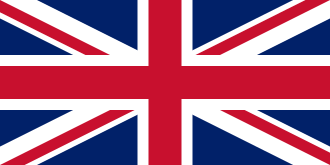
- The Union Flag combines the crosses of St George, St Andrew and St Patrick; the Welsh dragon is not included because Wales was already united with England when the first Union Flag was created.
- Queen Victoria reigned from 1837 to 1901. The British Empire expanded greatly during the Victorian period.
- The Corn Laws were repealed in 1846, allowing cheaper grain to be imported and supporting freer trade.
- George and Robert Stephenson pioneered railway engines; Isambard Kingdom Brunel built major railways, bridges, tunnels and ships.
- Florence Nightingale improved nursing during the Crimean War and helped establish professional nursing.
- The Reform Acts gradually expanded the electorate and corrected unfair parliamentary representation.
- The Chartists campaigned for political reforms, including votes for working men and payment for MPs.
- Emmeline Pankhurst helped found the Women’s Social and Political Union. Women over 30 gained voting rights in 1918; equal voting rights with men at age 21 followed in 1928.
- The British Empire evolved into the Commonwealth as colonies became self-governing and independent.
The 20th century and Britain since 1945
- The assassination of Archduke Franz Ferdinand in 1914 helped trigger the First World War.
- Britain fought with the Allies. The war ended in 1918 and caused enormous casualties.
- The Easter Rising took place in Dublin in 1916. Ireland was partitioned in 1922; Northern Ireland remained in the UK and the rest later became a republic.
- The inter-war period included economic hardship and the Great Depression.
- Germany invaded Poland in 1939, beginning the Second World War in Europe.
- Winston Churchill became Prime Minister in 1940 and led Britain through the war.
- The Battle of Britain was an air battle fought by the Royal Air Force against Germany; the Blitz was the German bombing campaign against British cities.
- The evacuation from Dunkirk involved the rescue of British and French troops by naval and civilian vessels.
- The Allies defeated Germany in 1945. Alexander Fleming’s discovery of penicillin made a major medical contribution.
- Labour won the 1945 election under Clement Attlee and created the modern welfare state.
- The National Health Service was established in 1948 under Health Minister Aneurin Bevan and provided healthcare free at the point of use.
- William Beveridge’s report identified Want, Disease, Ignorance, Squalor and Idleness as five major social evils.
- Post-war Britain saw immigration from the Caribbean, India, Pakistan, Bangladesh and parts of Africa, helping rebuild the country and increasing diversity.
- The 1960s brought major social and cultural change, including liberalisation of laws and the global success of British popular music.
- Important British inventions and developments included television, radar, the jet engine, the hovercraft, Concorde, the Harrier jump jet, the cash machine, IVF and advances in cloning and MRI.
- Margaret Thatcher became the first woman Prime Minister in 1979 and served until 1990. Her government privatised nationalised industries and restricted trade-union powers.
- Britain fought Argentina in the Falklands conflict in 1982.
- Labour governed from 1997 under Tony Blair and later Gordon Brown; devolved institutions were created in Scotland, Wales and Northern Ireland.
- The UK participated in conflicts in Afghanistan and Iraq.
- A Conservative-Liberal Democrat coalition took office in 2010 under David Cameron.
- The UK voted to leave the European Union in a 2016 referendum and formally left on 31 January 2020.